
Presented by Victor Bekhet
United States Congress elections, 2026
Elections to the U.S. Congress will take place on November 3, 2026. All 435 districts in the U.S. House of Representatives and 33 seats in the U.S. Senate are up for election. Five of the House’s six non-voting members are also up for election.
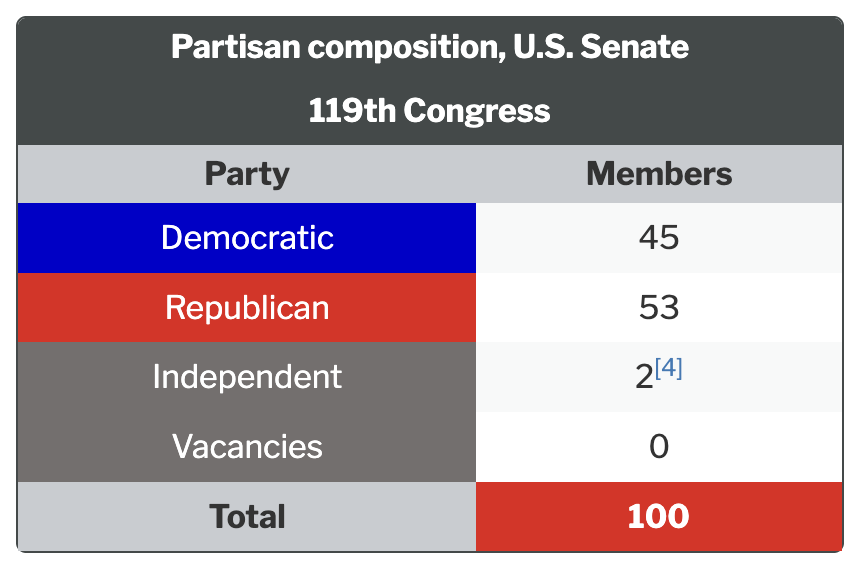
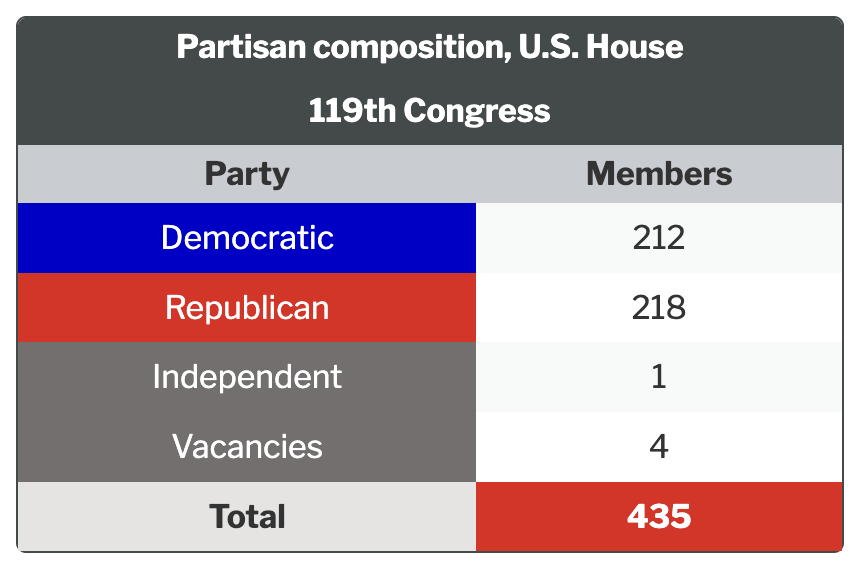
Heading into the 2026 general elections, Republicans control both chambers of Congress. They hold a 53–45 majority in the Senate, while two independents caucus with the Democrats, effectively giving the Democrats 47 votes for organizational purposes. In the House, Republicans have a 218-212 majority, with four vacancies. One member, Rep. Kevin Kiley (I-Calif.), caucuses with the Republicans, effectively giving Republicans 219 votes for organizational purposes.
In the 2026 general elections, Democrats need to gain a net of four seats to win a majority in the Senate. Meanwhile, Republicans can lose no more than two seats to retain a majority in the chamber.
As a result of the 2024 general elections, Republicans won a 53-45 majority in the Senate, while two independents caucused with the Democrats, effectively giving the Democrats 47 votes for organizational purposes.[1] Before those elections, Democrats held a 47-49 majority, with four independents.[2] Three of those independents caucused with the Democratic Party, and one other counted towards the Democratic majority for committee purposes.[3] Democrats could not lose any seats and retain a majority in the chamber. Meanwhile, Republicans needed a net gain of two seats to take the majority. In the 2024 general elections, Republicans gained a net of four seats.
In the 2026 general elections, Democrats need to gain a net of three districts to win a majority in the House. Meanwhile, Republicans can lose no more than two districts and retain a majority in the House.
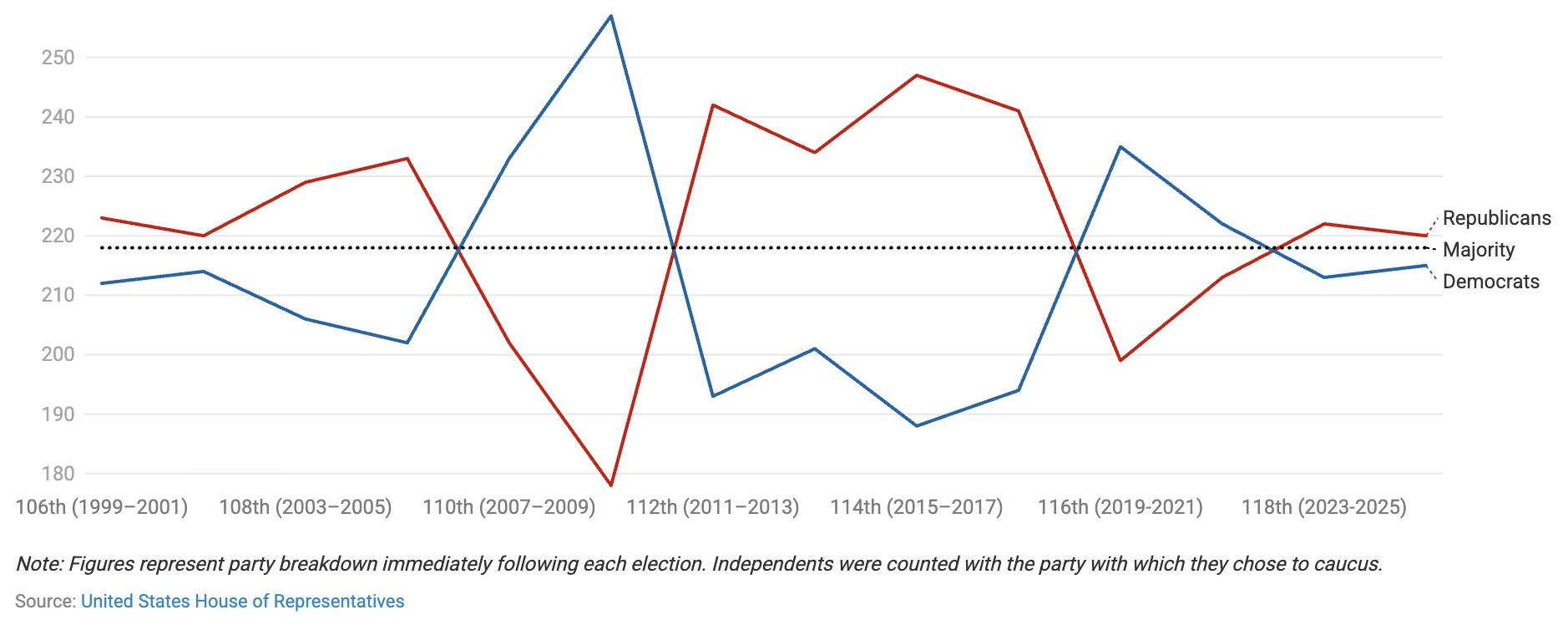
As a result of the 2024 general elections, Republicans gained a 220-215 majority in the chamber. Before the elections, Republicans had a 219-213 majority with three vacancies — one resulting from the death of a Democratic member, one from a Democratic resignation, and one from a Republican resignation. Democrats needed to retain the two vacant seats and gain a net of four seats to win a majority. They retained control of both seats and gained a net of one seat. Republicans could only lose a net of three seats — including the vacant seat — and retain control of the chamber.
As of June 1, 2026, 11 incumbent senators and 58 incumbent representatives are not running for re-election in 2026.
Ballotpedia is following elections for 12 seats in the U.S. Senate as battlegrounds races in 2026. Democrats control two of those seats, and Republicans control seven. Ballotpedia is also following elections for 43 districts in the U.S. House as battleground races in 2026. Democrats control 23 of those districts, and Republicans control 20.
Two special elections are also scheduled to take place on November 3, 2026. One special election will fill the last two years of the six-year term that Secretary of State Marco Rubio (R-Fla.) was elected to in 2022. The other special election will fill the last two years of the six-year term that Vice President J.D. Vance (R-Ohio) was elected to in 2022.
Those elected to the U.S. Senate in the regularly scheduled elections on November 3, 2026, will begin their six-year terms on January 3, 2027. Additionally, those elected to the U.S. House in the regularly scheduled elections on November 3, 2026, will begin on the same date.
Explore Ballotpedia’s coverage of these elections:
Partisan breakdown
The partisan balance of Congress before and after the election
Read more >
U.S. Senate
Information about U.S. Senate elections
Read more >
U.S. House
Information about U.S. House elections
Read more >
Incumbents defeated
Information about incumbents defeated in past elections
Read more >
Important dates and deadlines
A list of important dates and deadlines for the 2026 election cycle
Read more >
Partisan breakdown
Click the tabs below to view the current and historical partisan balance of each chamber of Congress.
Partisan control of the United States House (1999-2025)
U.S. Senate
See also: United States Senate elections, 2026
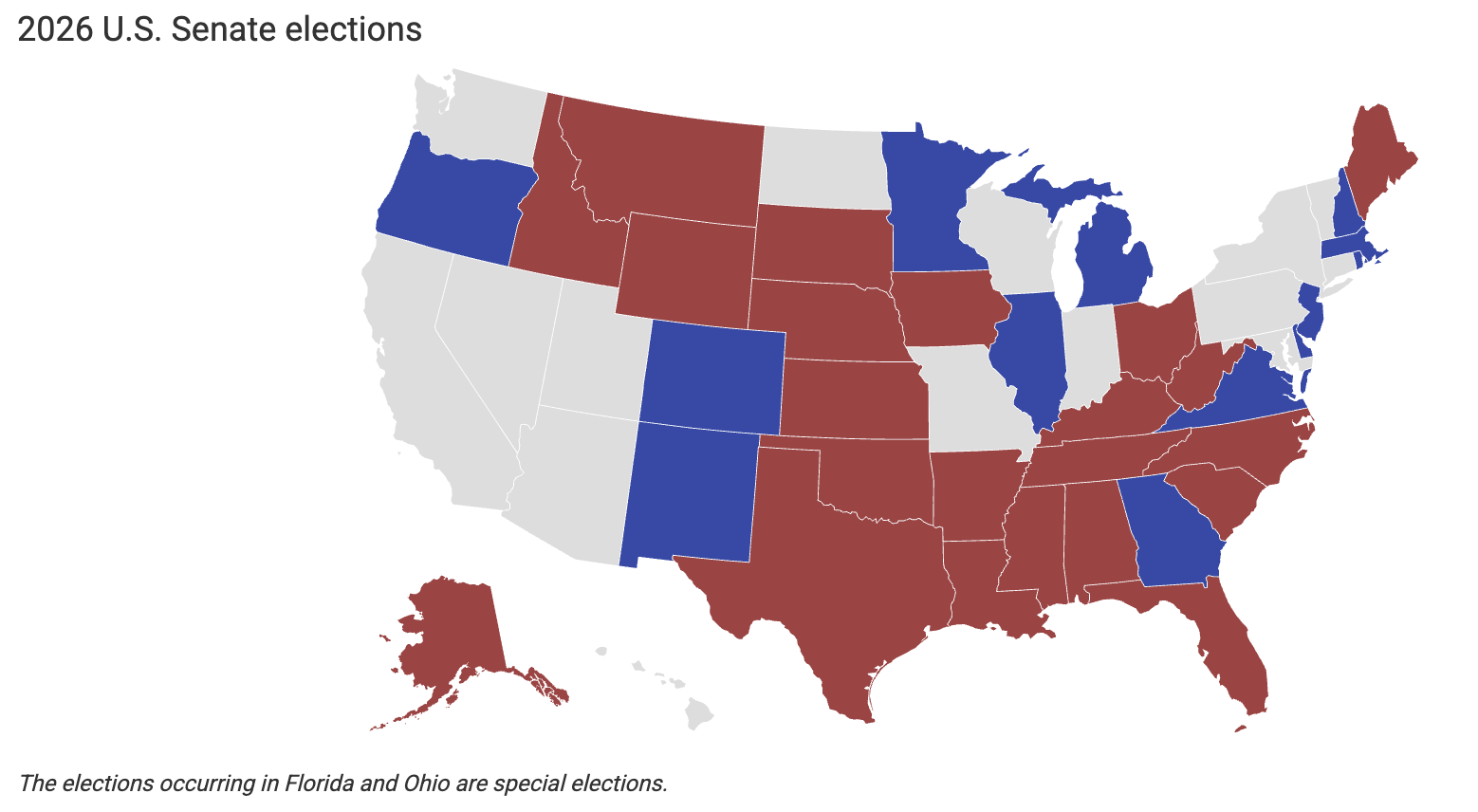
Elections to the U.S. Senate will happen on November 3, 2026. Thirty-three of the 100 seats in the chamber are up for election and another two seats are up for special election.
Of the 33 regularly scheduled general elections in 2026, Democrats control 13 and Republicans control 20.
In the 2026 general elections, Democrats need to gain a net of four seats to win a majority in the chamber. Meanwhile, Republicans can only lose two seats and retain a majority in the chamber.
As of March 24, 2026, 11 U.S. Senate incumbents — four Democrats and six Republicans — are not running for re-election in 2026.
Ballotpedia is following nine seats as battlegrounds races in 2026. Democrats control two of those seats, and Republicans control seven.
Democrats are defending two seats in states that Donald Trump (R) won in the 2024 presidential election. Those states are Georgia and Michigan. Republicans are defending one seat in a state that Kamala Harris (D) won in the 2024 presidential election. That state is Maine.
Two special elections will also happen on November 3, 2026. One special election is to fill the last two years of the six-year term that Marco Rubio (R-Fla.) was elected to in 2022. The other special election is to fill the last two years of the six-year term that J.D. Vance (R-Ohio) was elected to in 2022.
As a result of the 2024 general elections, Republicans won a 53-45 majority in the chamber. Additionally, two independents caucus with the Democrats. Heading into the 2024 general election, Democrats had a 47-49 majority with four independents. Three of those independents caucused with the Democrats, and one other counted towards the Democratic majority for committee purposes. Democrats could not lose any seats and retain a majority in the chamber. Meanwhile, Republicans needed to gain a net of two seats and retain a majority in the chamber. In the 2024 general elections, Republicans gained a net of four seats.
Four incumbents — all Democrats — lost re-election in the general elections in 2024.
Those elected to the U.S. Senate in the regularly scheduled elections on November 3, 2026, will begin their six-year terms on January 3, 2027.
2026 U.S. Senate elections
Seats that changed party hands in 2020
See also: United States Senate elections, 2020
In 2020 — the last time these 33 seats were up for regular election — five seats changed party hands. Democrats gained four seats, while Republicans gained one seat.
| Senate seats that changed party hands, 2020 | ||||||
|---|---|---|---|---|---|---|
| State | Pre-election incumbent | 2020 winner | Margin of victory (percentage points) | |||
| Alabama |  Doug Jones Doug Jones |
 Tommy Tuberville Tommy Tuberville |
20.4 | |||
| Arizona (special) | Martha McSally |
Mark Kelly |
2.4 | |||
| Colorado | Cory Gardner |
John Hickenlooper |
9.3 | |||
| Georgia | David Perdue |
Jon Ossoff |
1.2 | |||
| Georgia (special) | Kelly Loeffler |
Raphael Warnock |
2.0 | |||
U.S. House
Elections to the U.S. House of Representatives will happen on November 3, 2026. All 435 districts are up for election. Five of the chamber’s six non-voting members are also up for election.
Looking ahead at the 2026 general elections, Democrats need to gain a net of three districts to win a majority in the chamber. Meanwhile, Republicans can lose no more than two districts to retain a majority in the chamber.
As a result of the 2024 general elections, Republicans gained a 220-215 majority in the chamber. Heading into the general elections, Republicans had a 220-212 majority with three vacancies. Two vacancies happened because Democratic members died, and one happened because a Republican member left office early.
In 2024, Democrats needed to retain control of the two vacant seats and gain a net of four seats to win a majority. They retained control of both seats and gained a net of one seat. For Republicans, retaining control required limiting their losses to no more than three seats, including the vacant seat.
Eleven incumbents — four Democrats and seven Republicans — lost re-election in the general elections. Additionally, four incumbents — two Democrats and two Republicans — lost re-election in the primary elections.
There are 21 Democratic-held U.S. House districts up for election in 2026 that Donald Trump (R) won in the 2024 presidential election. Conversely, there are nine Republican-held U.S. House districts up for election in 2026 that Kamala Harris (D) won in the 2024 presidential election.
As of June 1, 2026, 58 U.S. House incumbents — 22 Democrats and 36 Republicans — are not running for re-election in 2026.
Ballotpedia tracked 42 districts (12%) as battleground races in 2026. Democrats held 22 of those districts, and Republicans held 20.
As of June 1, 2026, six states — California, Florida, Missouri, North Carolina, Tennessee, and Texas — will use different congressional maps for the 2026 election than they did in 2024 because they voluntarily underwent mid-decade redistricting. Additionally, Ohio will use a different map due to state law, and Alabama, Louisiana, and Utah will do so due to litigation.
Those elected to the U.S. House of Representatives in the regularly scheduled elections on November 3, 2026, will begin their two-year terms on January 3, 2027.
Incumbents defeated
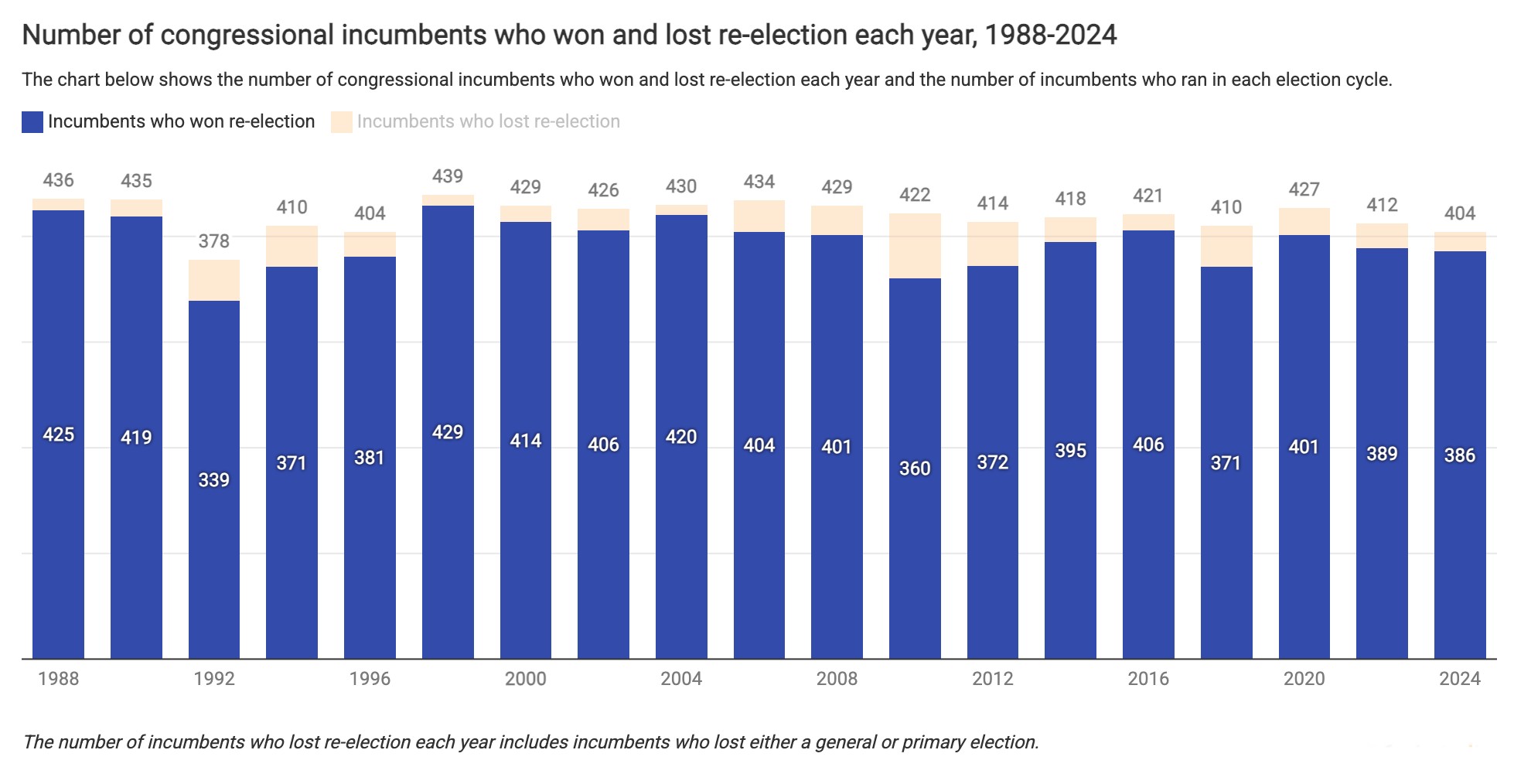
Between 1988 and 2024, 489 incumbents in the U.S. Senate and House lost re-election in either a general or primary election. The chart and table below show the number of incumbents who ran for re-election in each election cycle and the number who lost their re-election bids.
Seats open as a result of an incumbent losing re-election in a primary
| Year | Incumbents who ran for re-election | Incumbents who lost re-election | Percentage of incumbents who lost re-election |
|---|---|---|---|
| 1988 | 436 | 11 | 2.52% |
| 1990 | 435 | 16 | 3.68% |
| 1992 | 378 | 39 | 10.32% |
| 1994 | 410 | 39 | 9.51% |
| 1996 | 404 | 23 | 5.69% |
| 1998 | 439 | 10 | 2.28% |
| 2000 | 429 | 15 | 3.50% |
| 2002 | 426 | 20 | 4.69% |
| 2004 | 430 | 10 | 2.33% |
| 2006 | 434 | 30 | 6.91% |
| 2008 | 429 | 28 | 6.53% |
| 2010 | 422 | 62 | 14.69% |
| 2012 | 414 | 42 | 10.14% |
| 2014 | 418 | 23 | 5.50% |
| 2016 | 421 | 15 | 3.56% |
| 2018 | 410 | 39 | 9.51% |
| 2020 | 427 | 26 | 6.09% |
| 2022 | 412 | 23 | 5.58% |
| 2024 | 404 | 18 | 4.46% |
Important dates and deadlines
This section will provide important dates throughout the 2026 congressional election cycle, including filing deadlines, primaries, and campaign finance reporting deadlines, when available.